A Living Room Built from Materials, Not Trends
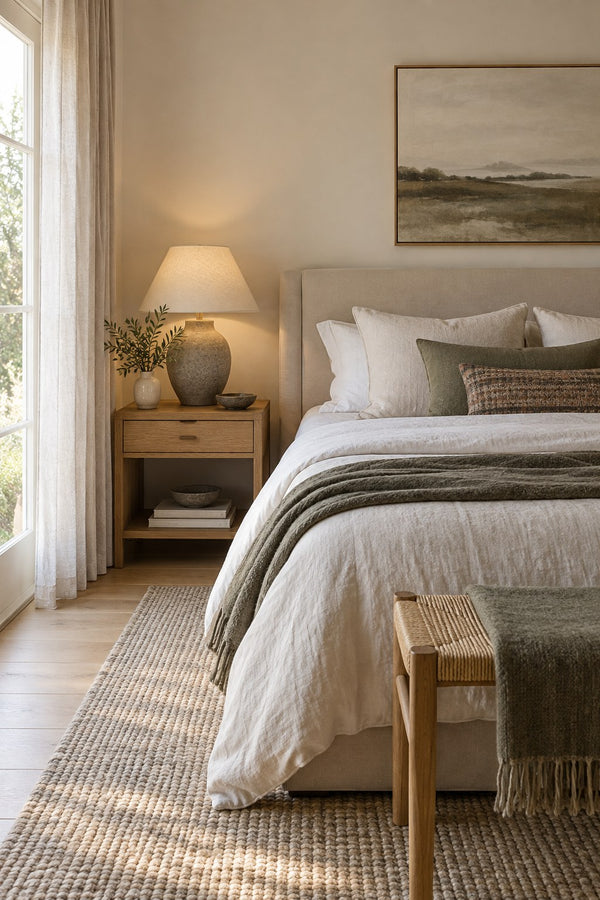
A calm living room rarely depends on a single statement piece. It comes from the way natural materials repeat, soften the light, and make everyday use feel easy. Oak, linen, wool, stone, woven fibre, and matte ceramic all bring variation without asking for constant attention.
Decorating with natural materials is not about making a room look rustic or filling it with objects. The most successful spaces are edited. They combine a small number of finishes, give each one a clear role, and leave room for the home to feel lived in. Start with the surfaces you touch most often, then build the atmosphere one layer at a time.
1. Begin with the Room's Existing Architecture
Before adding furniture, notice what the room already offers. Look at the direction of daylight, the colour of the floor, the scale of the windows, and the places people naturally pause. These are the elements that should guide the palette. A warm timber floor can lead toward oak, linen, and clay; a cooler stone floor may need soft wool, woven pieces, and a warmer lamp shade to make the room feel balanced.
Keep the largest surfaces quiet. Walls, curtains, and the main rug create the backdrop for everything else, so choose tones that work in changing light. Warm white, chalk, oat, soft mushroom, and muted putty are easier to live with than a highly specific colour. Their subtle differences become visible through texture rather than contrast alone.
2. Choose One Grounding Material
Every room benefits from a material that feels visually steady. In a living room, this is often oak, travertine, a woven rug, or a generous upholstered sofa. Let that material appear in more than one place: an oak coffee table can relate to shelving, picture frames, or a side chair; a stone tray can echo a small lamp base or ceramic object.
Repetition does not mean matching every item. It creates a quiet thread through the room. Choose one dominant finish, one supporting finish, and a few soft details. This prevents a natural-material scheme from becoming a collection of unrelated baskets, vases, and timber tones.
3. Use Textiles to Create Comfort and Depth
Textiles do the most work in making a room feel welcoming. Begin with the rug because it establishes the size of the seating area and softens sound underfoot. A large wool or jute rug should reach beneath the front legs of the sofa and chairs so that the arrangement feels connected rather than scattered.
Add variation through a linen sofa, a boucle cushion, a washed cotton throw, or curtains with a visible weave. Keep the colours close together and change the texture instead. A room in cream, taupe, and oak can feel rich when linen, wool, boucle, and woven fibre catch the light differently. This is more enduring than relying on a strong pattern in every corner.
4. Let Wood Bring Warmth, Not Weight
Wood is most convincing when its tone is controlled. Choose a family rather than a perfect match: pale oak, ash, and lightly smoked timber can sit together because their undertones are compatible. Avoid introducing several competing orange, red, and grey woods in the same sightline.
Balance solid timber with lighter forms. A low table with open space beneath it, a slender bench, or shelving with breathing room will keep the room from feeling heavy. Timber is especially effective at the points where hands meet the space: table edges, handles, stools, and frames. These details reward use every day.
5. Add Stone and Ceramic in Small, Purposeful Moments
Stone and ceramic give a soft room definition. A travertine side table, a hand-thrown bowl, or a ceramic lamp base introduces a firmer texture beside upholstery and curtains. Their surface variation makes a neutral scheme feel less flat, especially in daylight.
Use fewer pieces with more presence. One large vessel with seasonal branches often feels more considered than several small decorative objects. A stone tray can gather a candle, remote control, or book and make a coffee table feel organised without becoming overly styled.
6. Build the Lighting in Layers
Natural materials look their best when the lighting is gentle. Relying on one central ceiling light can make timber, linen, and stone appear harsher than they are. Combine a floor lamp near seating, a shaded table lamp at eye level, and a softer ambient source for the rest of the room.
Choose warm bulbs for evening and shades that diffuse rather than expose the light source. A linen or parchment shade adds texture even when the lamp is off. During the day, use sheer curtains to soften glare while preserving the connection to the window. The aim is a room that changes gracefully from morning to night.
7. Edit the Final Layer
The final step is subtraction. Remove anything that does not support comfort, function, or the material story. A living room needs clear surfaces, places to put a drink or a book, and enough open space to move easily. Leave one shelf partially empty. Let a wall stay quiet. Good decoration creates relief as well as interest.
Bring in personality through objects that have texture or meaning: a stack of art books, a handmade bowl, a framed drawing, or branches from the garden. These details should feel collected over time, not added all at once. When the palette is restrained and the materials are honest, a room becomes warmer, calmer, and easier to return to.
Natural-material decorating works because it supports daily life. It softens sound, changes with the light, and improves with use. Rather than chasing a finished look, build a living room that can keep evolving around the materials you genuinely enjoy touching and seeing every day.