A Small Room Can Feel Generous
A compact living room does not need to become minimal or empty to feel larger. It needs clear circulation, the right scale, and a few materials that work together. The goal is not to disguise the room but to make every area feel intentional.
Light, proportion, and storage have more influence than decoration alone. Begin with the room's natural strengths, then choose fewer pieces that earn their place.
1. Start with a Clear Layout
Place the largest piece first and protect the route through the room. A sofa against the longest wall often creates the cleanest sightline, while a round coffee table makes movement easier in tight corners. Keep a little open floor visible around the rug so the room can breathe.
2. Let Daylight Travel Further
Use full-height curtains hung close to the ceiling and extend the pole beyond the window. Sheer linen softens glare without closing the room. A slim mirror opposite or beside a window can reflect light and depth, but it should support the view rather than become the focal point.
3. Choose Furniture with Visual Space
Low profiles, raised legs, and open bases make a room feel less crowded because the floor remains visible. One well-proportioned sofa and a pair of light chairs usually work better than several small seats. Select pieces with practical depth; oversized arms and deep cushions can steal valuable circulation space.
4. Use Storage that Belongs to the Architecture
Closed storage keeps everyday objects from taking over the room. A low oak cabinet, built-in bench, or slim media unit can hold what is needed while leaving the top surface calm. Open shelves should be edited like a composition: books, one or two vessels, and areas of empty space.
5. Keep the Colour Palette Tonal
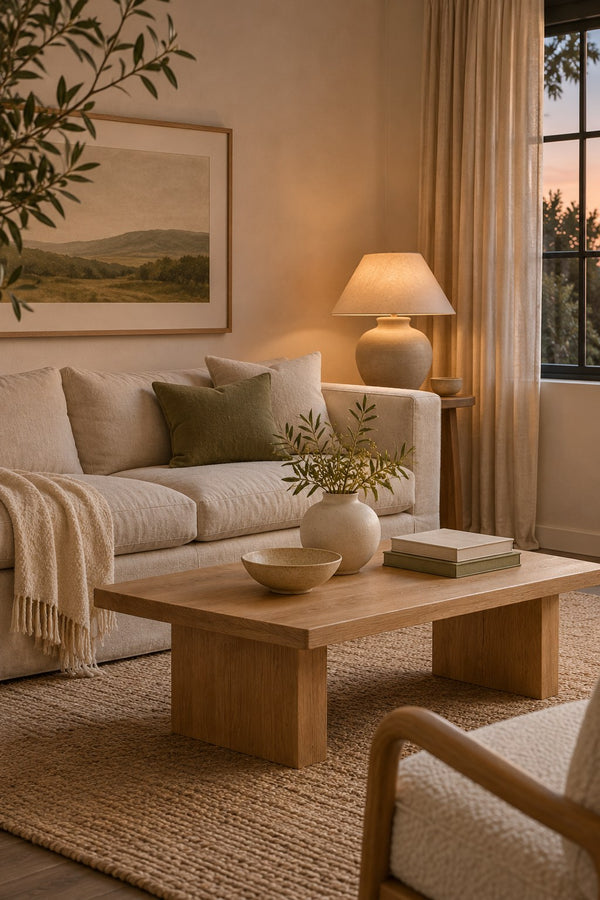
Warm white walls, pale oak, sand-coloured textiles, and muted olive or clay accents create depth without breaking the room into visual fragments. Use contrast through texture instead of many colours: linen curtains, a wool rug, ceramic, and natural timber will each respond differently to changing light.
6. Define Zones Without Closing Them Off
A rug can establish the lounge area, while a low bookcase or a floor lamp can signal a reading corner without adding a partition. Repeat one material across the zones to keep the room connected. The best small spaces have purpose, but they do not feel divided into boxes.
7. Finish with Warm, Flexible Lighting
One central fixture is rarely enough. Add a table lamp at eye level and a floor lamp beside seating so the room can shift from practical daylight to a softer evening setting. Keep accessories selective: a branch, a ceramic bowl, and a few books feel richer than a crowded display.
Small-room decorating succeeds when the room is easy to use. Clear paths, controlled storage, comfortable light, and honest materials create a space that feels calm, welcoming, and much more generous than its dimensions suggest.