Biophilic Design 101: Bringing the Outdoors in for Better Well-Being
Biophilic design brings elements of the natural world into our homes through plants, daylight, organic materials, botanical colors, and textures inspired by nature. The objective is not to transform every room into an indoor jungle, but to create a stronger visual and sensory connection with the outdoors.
A biophilic interior can feel fresh, calming, and welcoming while remaining practical for everyday living. Even small changes—such as placing a plant near a window, introducing natural wood, or opening a room to more daylight—can make the home feel more connected to its surroundings.
What Is Biophilic Interior Design?
Biophilic design is an approach that incorporates nature and nature-inspired features into the built environment. In residential interiors, this can include living plants, natural materials, daylight, views of greenery, organic shapes, earthy colors, and surfaces that retain their original texture.
The style works with many decorative directions, including modern, minimalist, rustic, Scandinavian, tropical, Mediterranean, and contemporary interiors.
1. Introduce Houseplants at Different Heights
Houseplants are one of the simplest ways to create a biophilic interior. Instead of placing every plant at the same level, combine floor plants, tabletop varieties, hanging plants, and greenery displayed on shelves.
- Use tall plants to soften empty corners.
- Place smaller varieties on shelves, consoles, and side tables.
- Choose trailing plants for high shelves or hanging containers.
- Group plants in odd numbers for a more natural arrangement.
- Select varieties suited to the available light and humidity.
2. Make Natural Light Part of the Design
Natural light changes throughout the day, adding movement, warmth, and visual variety to an interior. Keep windows as open as possible and use lightweight curtains that soften direct sunlight without making the room feel enclosed.
Mirrors and light-colored surfaces can help distribute daylight through darker areas. Furniture should also be arranged carefully so that large pieces do not unnecessarily block windows or outdoor views.
3. Use Raw and Natural Textures
Natural materials add depth without requiring strong colors or complicated decoration. Wood grain, stone, clay, linen, cotton, rattan, cork, and woven fibers introduce subtle variations that make a room feel warmer and more tactile.
- Natural or reclaimed wood furniture
- Stone fireplaces, walls, or decorative objects
- Linen curtains and relaxed bedding
- Jute, sisal, or wool rugs
- Handmade ceramics and terracotta planters
- Woven baskets for practical storage
4. Create a Dedicated Green Corner
A concentrated arrangement of plants can create more visual impact than scattering individual pots throughout the room. Choose a corner with suitable daylight and combine plants with different leaf shapes, colors, and heights.
Add a comfortable chair, a small wooden table, or a floor lamp to turn the space into a calm reading or relaxation area. Keeping the containers within a coordinated color palette will prevent the arrangement from looking cluttered.
5. Bring Biophilic Design into the Bedroom
The bedroom benefits from a quieter interpretation of biophilic design. Soft neutral colors, natural wood, breathable textiles, and a limited number of carefully selected plants can create a restful atmosphere.
- Use cotton or linen bedding in warm neutral tones.
- Choose wooden bedside tables or a natural timber headboard.
- Add one or two plants suited to the room’s lighting conditions.
- Introduce botanical artwork without overwhelming the walls.
- Keep the arrangement simple and visually balanced.
6. Create a Nature-Inspired Bathroom
Bathrooms are ideal for combining greenery with stone, timber, and spa-inspired details. Plants that tolerate humidity can soften hard surfaces, while wooden furniture and textured stone introduce warmth.
Use woven baskets, ceramic containers, natural towels, and warm lighting to complete the atmosphere. Proper ventilation remains essential, particularly in rooms with high humidity.
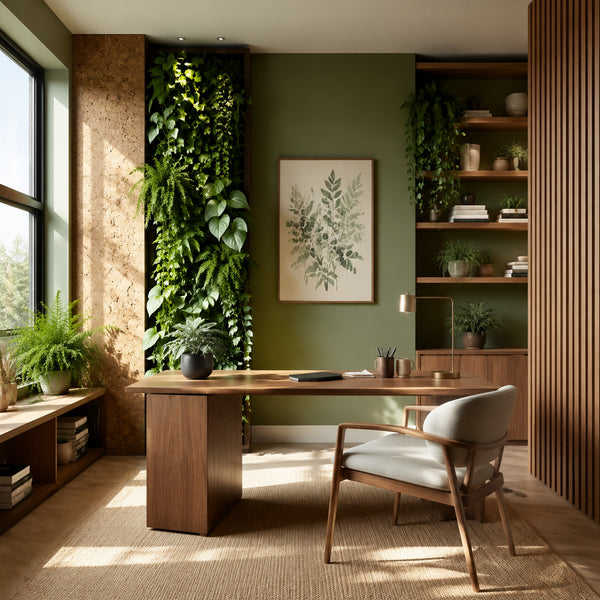
7. Design a More Natural Home Office
A biophilic workspace can feel less rigid and more visually comfortable. Position the desk near a source of natural light when possible, while avoiding direct glare on the screen.
Combine a wooden desk with plants, botanical artwork, natural storage baskets, and a restrained green or earthy color palette. A view of greenery—or even a carefully arranged group of indoor plants—can create a more pleasant background for focused work.
Use Botanical Colors and Organic Shapes
Biophilic interiors are not limited to green. Warm browns, sand, clay, stone grey, muted blue, cream, moss, and terracotta can all reference natural landscapes.
Organic shapes also help soften rigid architecture. Rounded furniture, irregular ceramics, curved mirrors, leaf-inspired patterns, and sculptural lighting can introduce the visual rhythm found in nature.
Biophilic Design and Well-Being
Natural light, greenery, comfortable textures, and an organized environment can contribute to a home that feels calmer and more restorative. The greatest benefit often comes from the overall combination of light, materials, color, ventilation, and connection with nature.
Indoor plants can be an attractive part of this approach, although they should complement—not replace—appropriate ventilation and regular care of the indoor environment.
Quick Biophilic Design Checklist
- Maximize natural light without sacrificing comfort.
- Choose plants suited to each room’s conditions.
- Combine greenery at several heights.
- Introduce wood, stone, linen, clay, and woven fibers.
- Use earthy and botanical colors.
- Keep windows and outdoor views visually accessible.
- Add organic shapes and nature-inspired artwork.
- Avoid overcrowding rooms with unnecessary decoration.
- Balance visual beauty with practical maintenance.
A Home More Connected to Nature
Biophilic design does not require a complete renovation. Begin with daylight, a few well-chosen plants, natural textiles, and one or two tactile materials. These simple elements can gradually transform an ordinary interior into a warmer, fresher, and more inviting home.