How to Choose the Right Coffee Table for Your Living Room Layout
A coffee table may appear to be a simple finishing touch, but its size, height, and shape can determine whether a living room feels balanced or difficult to navigate. The right table should relate naturally to the sofa, remain within comfortable reach, and leave enough space for people to move around the seating area.
Instead of choosing a coffee table based only on its appearance, begin with the proportions and layout of the room. A table that looks perfect in a spacious showroom may feel oversized in a compact apartment, while a very small table can appear lost beside a large sectional.
Start with the Length of the Sofa
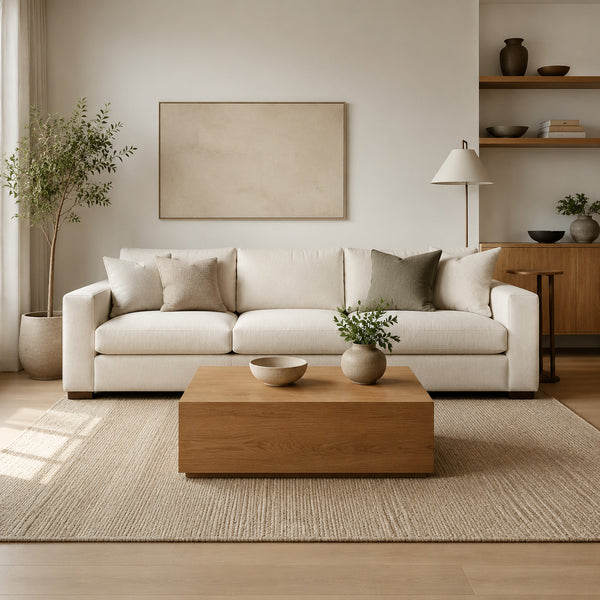
As a general guide, a coffee table should measure approximately two-thirds the visible length of the sofa. This creates a balanced relationship without making the table dominate the seating area.
- A standard three-seat sofa usually works well with a medium rectangular or oval coffee table.
- A compact loveseat needs a smaller round, square, or narrow rectangular table.
- A long sectional can support a larger square or rectangular design.
- Two facing sofas usually need a table substantial enough to connect both sides of the conversation area.
The table does not need to match the sofa precisely. The two-thirds guideline simply provides a useful starting point before considering circulation and the other furniture in the room.
Choose the Correct Coffee Table Height
The surface of a coffee table should normally be level with the sofa seat or slightly lower. A difference of approximately one or two inches creates comfortable proportions and makes the table easy to reach.
A table that is significantly higher than the sofa can obstruct sightlines and make the seating feel enclosed. A very low design can look elegant, particularly in a contemporary interior, but it may be less practical for everyday use.
- Measure from the floor to the top of the sofa seat cushion.
- Compare that measurement with the full height of the coffee table.
- Consider who will use the room and how frequently the table will be reached.
- Avoid judging height from product photographs without checking the measurements.
Allow Comfortable Space Around the Table
Leave approximately 14 to 18 inches between the coffee table and the sofa. This is generally close enough to reach a drink or book while providing enough room for people to sit down and stand up comfortably.
Main walkways require more space. Where people regularly pass between the coffee table and another piece of furniture, aim for approximately 30 inches of clearance whenever the room allows it.
Rectangular Coffee Tables for Straight Sofas
A rectangular coffee table is one of the most versatile choices for a traditional three-seat sofa. Its long surface follows the horizontal line of the seating and provides convenient access from several positions.
This shape works particularly well in medium and large living rooms. In a smaller space, select a narrow rectangular table rather than reducing the walking area with an excessively deep design.
Round Coffee Tables for Compact Rooms
Round coffee tables soften rooms dominated by straight walls, cabinets, and rectangular sofas. Without sharp corners, they also make it easier to move through compact layouts.
A round table works especially well with a loveseat, a small sofa and armchair combination, or seating arranged around a central point. However, it should still be large enough to feel visually connected to the sofa.
Square Coffee Tables for Sectional Sofas
A square table can fill the open area created by an L-shaped or U-shaped sectional more effectively than a narrow rectangular design. It provides a generous central surface and can be reached from different sections of the sofa.
Before choosing a large square table, measure the internal opening of the sectional. Maintain comfortable space around every accessible side so the table does not block entry into the seating area.
Oval Tables for Narrow Living Rooms
An oval coffee table combines the useful length of a rectangular table with the easier circulation of rounded edges. This makes it particularly suitable for long, narrow rooms or interiors where a main walkway passes close to the seating.
The curved ends reduce visual weight and can prevent the room from feeling crowded while still providing a practical surface.
Nesting Tables for Flexible Layouts
Nesting tables are useful in small or multifunctional living rooms. The smaller table can remain underneath the larger one when floor space is needed and be moved beside a chair or sofa when an additional surface is required.
Choose nesting tables with coordinated materials and clearly different heights. They should look intentional both when grouped together and when separated around the room.
Match the Shape to the Sofa Arrangement
-
Straight sofa: Rectangular, oval, or paired round tables.
-
Loveseat: Small round, square, or compact nesting tables.
-
L-shaped sectional: Square, round, or generously proportioned rectangular table.
-
U-shaped sectional: Large square or round table positioned centrally.
-
Two facing sofas: Wide rectangular, oval, or sculptural central table.
-
Narrow room: Slim oval or narrow rectangular table with open clearance.
Consider Visual Weight as Well as Measurements
Two coffee tables with identical dimensions can feel completely different. A solid block table has greater visual weight than a design with slender legs or a transparent glass surface.
In a compact room, an open frame, raised legs, or a lighter material can preserve a feeling of space. A large living room with substantial seating may benefit from a solid wood, stone, or sculptural table capable of anchoring the arrangement.
Balance Style with Everyday Function
Think about how the coffee table will actually be used. A household that regularly serves drinks or snacks may need a durable, easy-to-clean surface. A room used primarily for relaxing may benefit from concealed storage, nesting elements, or softly rounded edges.
- Use drawers or lift-top storage when the room lacks other storage options.
- Choose rounded corners for tighter circulation routes.
- Check whether delicate finishes suit the demands of everyday life.
- Make sure decorative objects leave enough usable surface.
- Use a tray to organize smaller items without creating visual clutter.
A Simple Coffee Table Checklist
- Is the table approximately two-thirds the length of the sofa?
- Is its surface level with or slightly below the sofa seat?
- Are there approximately 14 to 18 inches between the table and seating?
- Does its shape complement the sofa arrangement?
- Can people move through the room without navigating around sharp corners?
- Does the table provide enough surface and storage for everyday use?
The ideal coffee table should feel integrated into the living room rather than added as an isolated object. When its scale, shape, height, and placement respond to the sofa and surrounding space, it can anchor the entire seating area while keeping the room comfortable and easy to use.