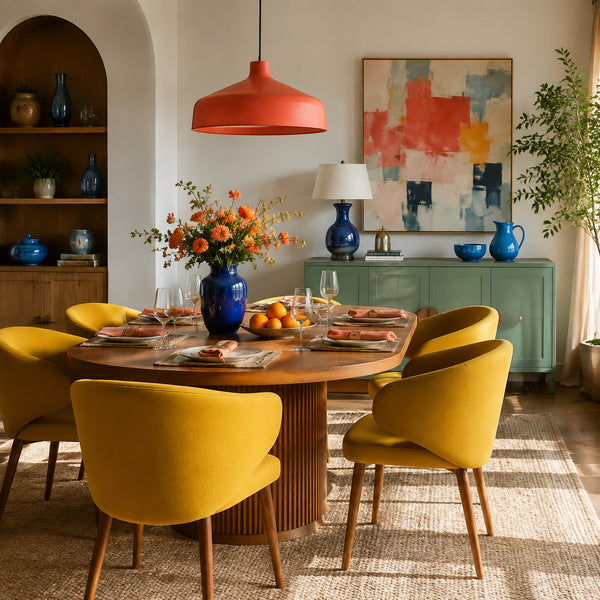
Dopamine Decor: How to Use Happy Colors to Boost Your Daily Mood
Dopamine decor celebrates the emotional impact of color by filling the home with shades, patterns, and objects that feel personal and uplifting. Instead of following a rigid palette or decorating entirely in neutrals, this approach encourages the use of colors that make you feel energized, comfortable, and happy.
Sunny yellows, playful corals, electric blues, and soft pastel greens can transform the atmosphere of a room. The key is not to use every color everywhere, but to create a thoughtful balance between expressive statement pieces and quieter elements that allow them to stand out.
Start with the Colors That Make You Happy
Dopamine decor is highly personal. One person may feel energized by bright yellow, while another may prefer cobalt blue, vivid coral, or a softer combination of green and pink. Begin by identifying two or three colors that consistently attract your attention.
Use one as the dominant color, another as a supporting shade, and the third for smaller accents. This creates a clear visual hierarchy and prevents a colorful room from appearing chaotic.
Create a Joyful Living Room
The living room provides plenty of opportunities to experiment with color. A yellow sofa, electric blue armchair, or coral accent chair can establish the palette immediately. If replacing large furniture is not practical, introduce color through cushions, lamps, artwork, rugs, vases, and occasional tables.
A neutral architectural background can help saturated colors feel more sophisticated. Warm white walls, natural wood, and a pale rug give bold furniture enough visual space while maintaining a bright and balanced interior.
Use Sunny Yellow for Energy
Yellow reflects light beautifully and can make a room feel warmer and more optimistic. It works especially well in kitchens, breakfast areas, dining rooms, and other spaces associated with daytime activity.
Use yellow on one substantial element, such as dining chairs or a pendant light, and repeat it through two or three smaller accessories. Mustard and ochre offer a warmer, more grounded interpretation, while lemon yellow creates a fresher and more playful effect.
Add Coral for Warmth and Personality
Coral combines the energy of orange with the softness of pink. It brings warmth to bedrooms, living rooms, bathrooms, and home offices without feeling as intense as a pure red.
A coral headboard, vanity, chair, or lamp can become an effective focal point. Pair it with pastel green for a relaxed botanical feeling, yellow for an energetic palette, or electric blue for stronger contrast.
Introduce Electric Blue for Contrast
Electric and cobalt blues create depth and definition within a colorful room. They are particularly effective when used on furniture with simple silhouettes, including sofas, desks, mirrors, cabinets, and side tables.
Because blue has such a strong visual presence, a few carefully positioned elements may be enough. A blue desk can anchor a home office, while matching bedside lamps can bring symmetry and clarity to a colorful bedroom.
Soften the Palette with Pastel Green
Pastel and sage greens make excellent background colors for brighter accents. They feel calm enough for walls, cabinetry, shelving, and tiles while still giving the room more character than a conventional beige or grey base.
In a kitchen, green cabinetry can be paired with yellow lighting and coral stools. In a bathroom, pale green tiles provide a refreshing backdrop for a colorful vanity, mirror, and towels.
Bring Dopamine Decor into the Bedroom
A colorful bedroom can still feel peaceful. Choose one strong feature, such as a coral upholstered headboard, and surround it with softer versions of the remaining colors. Pastel green walls, yellow cushions, and blue lamps can create personality without interfering with the room’s restful purpose.
Keep the largest areas of bedding relatively simple and introduce color through blankets, cushions, artwork, and bedside accessories. These elements are also easy to update whenever you want a different atmosphere.
Make a Small Bathroom More Expressive
Small bathrooms are ideal places to experiment because a limited surface area makes each decision more visible. Pastel tiles, a coral vanity, a blue-framed mirror, or bright towels can transform a functional room into a memorable part of the home.
Rounded furniture and mirrors complement the playful character of dopamine decor, while terrazzo, brass, glass, and glossy tiles add texture and reflect light throughout the space.
Create an Energizing Home Office
Color can help visually separate a workspace from the rest of the home. An electric blue desk creates a strong anchor, while a coral chair and yellow task lamp introduce warmth and energy.
Keep storage organized and repeat the palette in only a few accessories. The objective is to create an inspiring environment without introducing unnecessary visual distraction around the working area.
Balance Bright Colors with Natural Materials
Wood, linen, ceramics, stone, rattan, and plants provide a useful counterbalance to saturated colors. Their natural textures keep a colorful interior feeling comfortable and grounded rather than artificial.
Warm timber is especially effective with yellow, coral, blue, and green because it connects the different shades through a consistent neutral element.
Build the Look Gradually
You do not need to redesign an entire room at once. Begin with one colorful object and observe how it changes the space. Add a second color through textiles or lighting, then introduce a third only if the room still feels balanced.
- Choose one dominant happy color.
- Add one complementary supporting color.
- Repeat each shade in two or three places.
- Use natural materials to soften strong contrasts.
- Leave some neutral space around statement pieces.
- Prioritize colors you genuinely enjoy over temporary trends.
A Home That Feels More Personal
Dopamine decor is not simply about making every surface bright. It is about using color intentionally to create rooms that feel expressive, welcoming, and unmistakably personal.
Whether you introduce a yellow chair, a coral vanity, an electric blue desk, or pastel green cabinetry, a carefully chosen burst of color can change both the appearance and the atmosphere of an everyday room.