Modern Farmhouse Decor: Key Elements to Get the Rustic-Clean Look
Modern farmhouse decor combines the welcoming character of a traditional country home with the simplicity and practical comfort of contemporary interiors. The style feels warm and familiar, but it avoids excessive ornamentation, themed accessories, and visually heavy rustic finishes.
The key is balance. Natural wood beams, apron-front sinks, shiplap, stone, linen, and handmade ceramics introduce farmhouse character. Sleek lighting, black metal accents, restrained color palettes, and furniture with simple silhouettes keep the interior feeling fresh and uncluttered.
Begin with a Warm Neutral Foundation
A rustic-clean farmhouse interior usually starts with a quiet palette that allows natural materials to become the main visual feature. Warm white, cream, oatmeal, soft beige, greige, and muted taupe work especially well with wood, stone, and black metal.
- Choose warm whites instead of cold or blue-toned whites.
- Use subtle variations of cream and beige to create depth.
- Introduce muted green, brown, charcoal, or clay through small accents.
- Let natural wood provide warmth rather than adding numerous bright colors.
Make the Apron-Front Sink a Functional Focal Point
An apron-front sink is one of the most recognizable modern farmhouse kitchen elements. Its deep basin and visible front give the room traditional character while remaining practical for everyday use.
To keep the result contemporary, surround it with simple cabinetry, restrained hardware, and clean work surfaces. A white sink pairs naturally with warm white shaker cabinets, an oak island, pale stone countertops, and a streamlined black or brushed-metal faucet.
The sink should feel integrated into the kitchen rather than treated as a decorative novelty. Repeating its traditional shape throughout the room can make the design feel themed instead of naturally evolved.
Use Natural Wood Beams as Architectural Structure
Exposed beams immediately add warmth, rhythm, and architectural interest. Their organic grain and subtle imperfections contrast beautifully with smooth plaster walls, simple furniture, and modern lighting.
- Keep authentic beams visible whenever their condition allows.
- Avoid finishes that make new beams look excessively distressed.
- Repeat the wood tone selectively in a table, shelf, or cabinet.
- Leave enough light-colored space around the beams so the ceiling does not feel heavy.
Natural beams have the greatest impact when they are allowed to remain distinctive. Matching every wooden object to the ceiling can make the interior appear overly coordinated.
Add Shiplap with Restraint
Shiplap introduces linear texture and a subtle connection to traditional rural architecture. However, it does not need to cover every wall. One carefully selected surface can provide enough farmhouse identity for an entire room.
Consider using it behind a dining table, around a built-in unit, on a kitchen wall, or as a restrained fireplace detail. Painting it in warm white creates gentle shadow lines without dominating the room.
Combining limited shiplap with plain plaster or painted walls creates a more sophisticated result and prevents the architecture from becoming visually repetitive.
Introduce Sleek Black Metal Accents
Black metal provides definition within a pale, textural farmhouse palette. It creates contrast, outlines important features, and connects traditional materials with contemporary design.
- Use black-framed windows to emphasize views and architectural lines.
- Add slim pendant lights above an island or dining table.
- Choose simple cabinet handles instead of ornate hardware.
- Repeat black through a faucet, wall light, side table, or candleholder.
Black works best as a controlled accent. A few repeated details create continuity, while too many dark elements can overpower the relaxed farmhouse atmosphere.
Choose Furniture with Simple Silhouettes
Modern farmhouse furniture should feel comfortable without appearing bulky or excessively decorative. Look for pieces with clear proportions, practical shapes, and visible material quality.
A streamlined cream sofa, solid oak coffee table, woven dining chairs, and minimal black side table can create a complete rustic-clean composition. Curved furniture may also be introduced, provided its form remains simple and the surrounding room has enough open space.
- Prioritize comfort and durable materials.
- Avoid filling every wall with large furniture.
- Combine one substantial wooden piece with lighter visual forms.
- Leave open areas around furniture to preserve a calm layout.
Layer Texture Instead of Adding Clutter
A neutral farmhouse room becomes interesting through texture rather than an abundance of accessories. Linen, wool, jute, boucle, unfinished wood, stone, woven baskets, and handmade ceramics create depth while maintaining a restrained palette.
Layer a woven rug beneath the seating area, place a linen throw over the sofa, and introduce one or two tactile cushions. A stone fireplace, timber table, or plaster wall can provide stronger texture without requiring additional decoration.
Balance Rustic and Contemporary Elements
The most convincing modern farmhouse rooms contain a deliberate mixture of old and new. If every object is rustic, the interior may feel heavy or staged. If everything is sleek and new, it can lose the warmth associated with farmhouse living.
- Pair a weathered wooden table with contemporary pendant lights.
- Place simple upholstered chairs beside a traditional stone fireplace.
- Combine handmade ceramics with clean built-in shelving.
- Use a vintage object as a focal accent rather than filling the room with collectibles.
- Contrast natural materials with precise black metal details.
Create a Curated Farmhouse Display
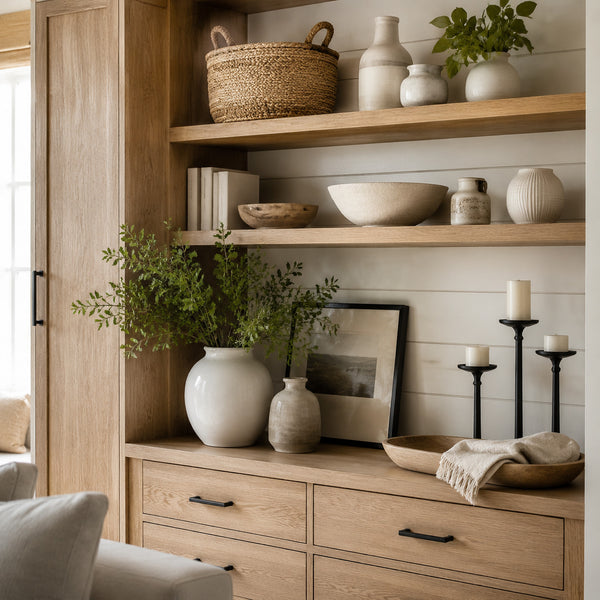
Open shelves, consoles, and fireplace mantels should feel considered rather than crowded. Select a limited group of objects with different heights, shapes, and materials.
Books, neutral ceramics, a woven basket, a small branch arrangement, and black candleholders provide enough variety for a complete display. Leaving visible empty space around them helps every piece feel intentional.
A Simple Rustic-Clean Formula
A successful modern farmhouse interior can be built from a straightforward combination: a warm neutral base, one or two architectural farmhouse features, natural materials, streamlined furniture, tactile textiles, and carefully repeated black accents.
The objective is not to reproduce a traditional farmhouse literally. It is to capture its warmth, practicality, and connection to natural materials while creating a home that feels comfortable, uncluttered, and relevant to contemporary living.