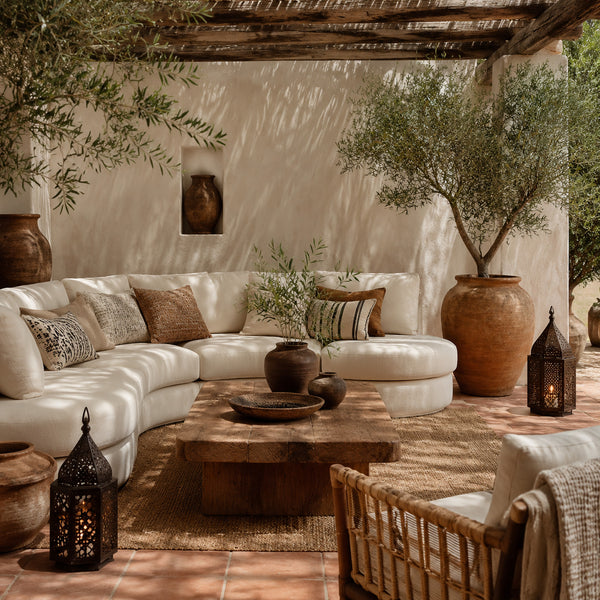
An outdoor area becomes much more useful when it is treated as an extension of the home rather than as a separate, unfinished space. A balcony, patio, or porch can provide many of the comforts of an indoor living room when it includes comfortable seating, layered textiles, appropriate lighting, privacy, and a clear arrangement.
The goal is not to reproduce an indoor room exactly. Outdoor spaces must accommodate changing weather, sunlight, moisture, dust, and limited storage. However, the same principles that make a living room welcoming—proportion, comfort, texture, lighting, and personal character—can also transform an exterior area.
Before selecting furniture, decide how the outdoor space will be used most often. A small balcony may function as a quiet reading corner or a place for morning coffee. A covered porch can become a relaxed conversation area, while a larger patio might accommodate lounging, dining, and entertaining.
A clear purpose prevents the area from becoming crowded with furniture that is rarely used. It also helps determine the most important elements and where they should be positioned.
Outdoor furniture is often pushed against walls or railings, leaving an empty central area. Instead, arrange the furniture as you would in an indoor living room. Position chairs and sofas so that people can face one another and place a coffee table or low surface within easy reach.
On a narrow balcony, two compact chairs angled toward a small table can create a complete conversation area. On a larger patio, an outdoor sofa combined with two lounge chairs establishes a more substantial seating group.
Always preserve a comfortable path between the door and the main seating area. Furniture should define the space without obstructing movement.
Outdoor furniture should combine visual comfort with materials suited to the local climate. Powder-coated metal, treated wood, synthetic wicker, durable resin, and weather-resistant fabrics are commonly used because they can tolerate exterior conditions better than ordinary indoor materials.
The furniture does not have to look purely functional. Many outdoor collections now use softened silhouettes, woven surfaces, upholstered cushions, and warm wood tones that closely resemble indoor pieces.
An outdoor rug is one of the easiest ways to make a balcony or patio feel like a finished room. It defines the seating area, introduces pattern and color, and softens hard surfaces such as concrete, tile, or decking.
Choose a rug manufactured for exterior use so it can tolerate moisture and regular cleaning. Flatwoven polypropylene and similar quick-drying materials are practical options for exposed areas.
The rug should be large enough to visually connect the furniture. Ideally, the front legs of the sofa and chairs should sit on it. A rug that is too small can make the furniture look disconnected and reduce the sense of an intentional room.
Cushions and throws provide the softness associated with an indoor living room. They also make firm outdoor furniture more comfortable and allow the color palette to be updated without replacing the larger pieces.
Use fabrics intended for exterior conditions whenever the area is exposed to sunlight or moisture. Even weather-resistant textiles last longer when protected from prolonged rain and stored during severe weather.
A single bright exterior light rarely creates the atmosphere of a living room. Several softer light sources produce a more comfortable and flexible result.
Wall sconces can provide general illumination, while portable lamps, lanterns, candles, and string lights create lower layers of ambient light. Solar lighting can be useful where electrical connections are limited, although the fixtures should still be positioned intentionally rather than scattered randomly.
Warm-colored light generally produces a more relaxed atmosphere than harsh cool-white illumination.
Privacy is especially important on apartment balconies and closely positioned patios. Screens, outdoor curtains, slatted wood panels, tall planters, and climbing plants can reduce exposure while maintaining airflow and natural light.
A partial screen is often enough to make a seating area feel protected. Position it where neighboring windows, walkways, or nearby balconies are most visible rather than enclosing the entire space.
Natural materials and plants help privacy features feel decorative. A wooden slatted panel combined with climbing greenery can become an attractive focal point instead of appearing like a barrier.
Plants soften hard surfaces and help outdoor seating feel connected to its surroundings. They can define edges, create height, improve privacy, and introduce movement through changing light and weather.
Combine plants with different forms rather than using many identical small pots. One tall plant, several medium specimens, and a trailing variety can create a more balanced arrangement.
Accessories give an outdoor room personality, but they should remain practical and easy to maintain. Trays, lanterns, ceramic planters, weather-resistant artwork, decorative bowls, and small sculptures can provide a finished appearance.
A tray is particularly useful because it groups small objects and makes them easier to carry inside. Avoid covering every table with decoration; outdoor surfaces still need room for drinks, books, food, and personal items.
When the outdoor area is visible through a window or glass door, coordinating it with the adjacent interior creates a stronger visual extension of the home. The furniture does not need to match, but repeating colors, materials, or shapes helps both spaces feel related.
A neutral indoor living room might connect with an outdoor rug in similar tones, wooden furniture, linen-colored cushions, and black lighting. A colorful interior could repeat one accent color through cushions, planters, or decorative objects outside.
Comfort depends on protection from direct sun, wind, and light rain. Covered porches already offer some shelter, while open patios and balconies may require an umbrella, retractable awning, shade sail, or outdoor curtain.
Shade should cover the main seating area during the hours it is most frequently used. Flexible solutions are useful because they can be adjusted as the sun moves or removed when more light is desired.
A limited balcony can still become a complete outdoor room. Choose one primary activity and avoid trying to include separate zones for lounging, dining, and gardening.
A covered porch can support more substantial furniture and softer decorative layers. An outdoor sofa, armchairs, a coffee table, lamps, curtains, and several cushions can create an atmosphere very close to an indoor living room.
Use the architecture of the porch to establish the arrangement. Columns, railings, ceiling beams, and walls can help define individual seating or dining zones. A ceiling fan can improve comfort while reinforcing the appearance of a fully developed room.
Larger patios benefit from several clearly defined areas rather than one scattered furniture arrangement. Outdoor rugs, planters, lighting, and furniture orientation can separate lounging, dining, and cooking zones without constructing permanent walls.
Maintain a consistent palette across all areas so the patio still feels unified. Repeating the same wood tone, metal finish, textile color, or planter style creates continuity.
A successful outdoor living room combines the comfort and visual balance of an indoor space with materials capable of handling exterior conditions. Comfortable seating, weatherproof textiles, a generous rug, layered lighting, plants, and privacy can transform even a modest balcony into a valuable extension of the home.
By planning the arrangement around a clear purpose and selecting each element carefully, patios, porches, and balconies can become inviting spaces for relaxing, reading, dining, and spending more time outdoors.