5 Small-Space Decor Mistakes You’re Probably Making (and Easy Fixes)
Decorating a small home is not simply a matter of choosing smaller furniture. The way each piece is positioned, how light moves through the room, and how effectively the walls are used can completely change the perception of available space.
Even a compact living room, bedroom, or studio apartment can feel comfortable and visually balanced when every element has a clear purpose. These five common decorating mistakes are easy to recognize and can usually be corrected without undertaking a major renovation.
1. Choosing Furniture That Is the Wrong Scale
One of the most common mistakes is filling a compact room with several pieces of undersized furniture. Although small chairs and tables may appear to save space, too many individual items can divide the floor into tiny sections and make the room feel cluttered.
The opposite problem is choosing an oversized sofa, bed, or dining table that restricts movement and dominates the entire interior.
Easy Fix
Measure the room and its main circulation paths before choosing furniture. Use fewer pieces with proportions that suit the available space. A properly scaled sofa combined with one lightweight armchair can look calmer and provide more usable seating than several small chairs.
- Leave comfortable walking space around the main furniture.
- Choose pieces with visible legs to expose more of the floor.
- Avoid placing furniture in every available corner.
- Use a rug large enough to visually connect the seating area.
2. Ignoring Multifunctional Furniture
Furniture that performs only one function can quickly consume valuable space. A traditional coffee table, bench, or bed may occupy a large area without providing any additional storage or flexibility.
Easy Fix
Select multifunctional furniture that adapts to different activities. An ottoman with hidden storage can hold blankets while serving as a seat or coffee table. A storage bench can provide seating and organize shoes, books, or household accessories.
- Use nesting tables that can be separated when required.
- Choose beds and sofas with integrated storage.
- Consider an extendable dining table for occasional guests.
- Use a desk that can also work as a console or dressing table.
Multifunctional furniture reduces the total number of pieces needed and makes it easier to keep a compact interior organized.
3. Placing Mirrors Without a Clear Purpose
Mirrors are often recommended for small rooms, but placing a small mirror on an empty wall does not automatically make the room appear larger. Its position, size, and reflection determine whether it improves the interior.
Easy Fix
Position a generously sized mirror where it can reflect natural light, an attractive interior feature, or an open section of the room. A mirror opposite or adjacent to a window can help distribute daylight and create a stronger sense of depth.
- Use one substantial mirror instead of many unrelated small ones.
- Avoid reflecting cluttered shelves or unattractive corners.
- Place mirrors where they can increase existing natural light.
- Consider a tall mirror to emphasize the room’s vertical dimension.
4. Depending on a Single Ceiling Light
A single central light often creates dark corners and makes a small room feel flat. Poorly distributed lighting can visually reduce the space, even when the walls and furniture use light colors.
Easy Fix
Combine several light sources at different heights. Ceiling lighting can provide general illumination, while wall sconces, table lamps, floor lamps, and concealed lighting add depth and improve specific areas.
- Use wall-mounted lights when floor and table space is limited.
- Add a table lamp beside a sofa, bed, or reading chair.
- Illuminate shelves or architectural details to create depth.
- Select warm, consistent light temperatures for a comfortable atmosphere.
Layered lighting makes a compact interior feel more flexible and creates different moods without changing its physical dimensions.
5. Forgetting to Use Vertical Space
When floor space is limited, leaving the upper part of the walls unused wastes valuable storage and display potential. Low furniture placed around the entire room can also create a crowded horizontal line.
Easy Fix
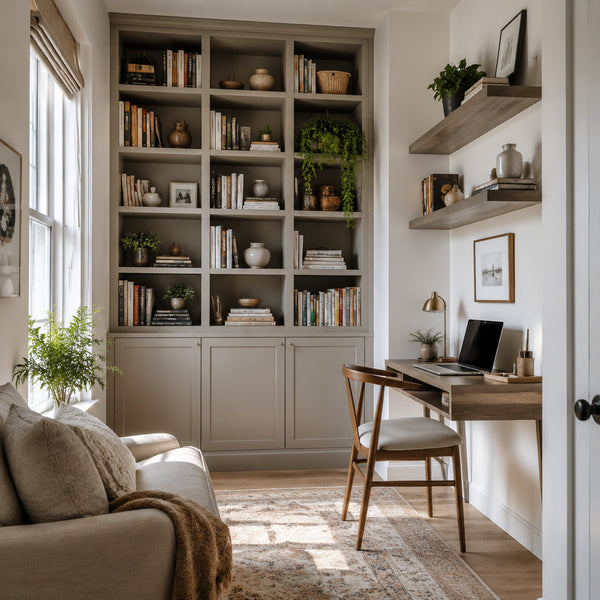
Use tall shelving, wall-mounted cabinets, hooks, and carefully positioned floating shelves to move storage away from the floor. Drawing the eye upward can also make the ceiling appear higher.
- Install shelves above a desk, sofa, doorway, or bed.
- Use tall bookcases rather than several low storage units.
- Keep frequently used objects within comfortable reach.
- Leave some open space between displayed objects to avoid visual clutter.
Create a Small Interior That Feels Comfortable
A successful small space does not need to be empty or purely minimalist. It needs furniture with the right proportions, storage that supports everyday life, carefully positioned mirrors, balanced lighting, and a sensible use of vertical surfaces.
Correcting these five mistakes can improve movement, organization, and visual balance without requiring a larger home. The objective is to make every element contribute to a room that feels practical, comfortable, and intentionally designed.