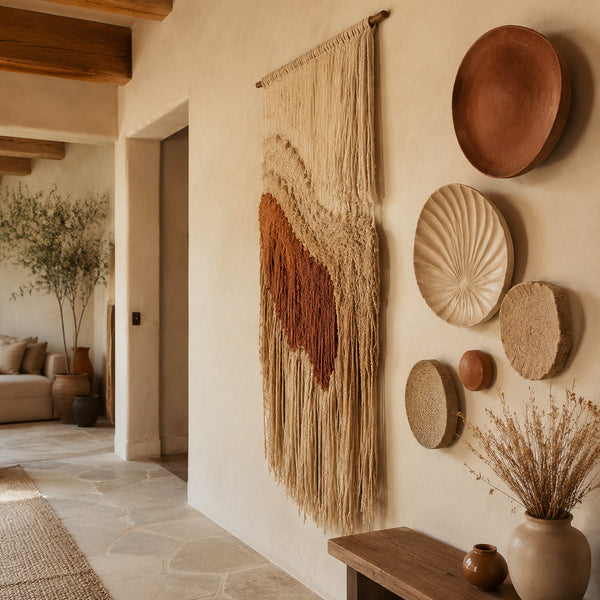
Wall decoration does not have to begin and end with framed prints. While paintings and photographs can introduce color and personality, dimensional wall art adds something equally important: texture. Woven fibers, natural materials, sculptural forms, aged wood, and layered objects create shadows and visual depth that make a room feel warmer and more complete.
Textured wall decor can also establish a focal point without requiring bold colors or complicated patterns. The key is choosing materials that complement the furniture, architecture, and overall atmosphere of the room.
A woven tapestry is one of the easiest ways to introduce softness and texture to a large wall. Unlike a framed print, fabric absorbs light and sound while bringing movement and warmth into the room.
Natural materials such as wool, cotton, linen, and jute work particularly well in neutral, rustic, bohemian, Scandinavian, and organic-modern interiors. A large tapestry can replace several smaller artworks and create a calm focal point above a sofa, bed, or console.
Decorative baskets can become sculptural wall art when grouped into a thoughtful arrangement. Their natural fibers introduce warmth, while differences in size, pattern, and weave create visual rhythm.
Begin with the largest basket slightly away from the center and build the arrangement around it. Combine shallow baskets of different diameters while repeating one or two colors to keep the display cohesive.
This approach works especially well in dining rooms, kitchens, entrance halls, and relaxed living spaces. Lightweight baskets are also easier to hang than many traditional wall sculptures.
A wall sculpture interacts with light in a way that flat artwork cannot. Curved plaster, carved wood, folded metal, ceramic forms, or mixed-media pieces create changing shadows throughout the day.
For a contemporary room, consider an abstract sculpture with a limited palette and a strong geometric composition. In a warmer interior, irregular handmade forms can introduce softness and character.
The sculpture should have enough space around it to be appreciated from different angles. Avoid surrounding a substantial piece with numerous small decorations, as this can weaken its impact.
Architectural fragments bring history, craftsmanship, and unique surface texture into an interior. Carved wooden panels, antique shutters, decorative window fragments, old doors, ceiling medallions, and sections of weathered molding can all become distinctive wall features.
The contrast between an aged architectural piece and a clean modern wall often produces the strongest result. A single salvaged element displayed above a simple console can provide more character than a large collection of conventional accessories.
Preserve scratches, faded finishes, carved details, and natural imperfections whenever possible. These marks reveal the history of the object and are an essential part of its visual appeal.
A gallery ledge provides the flexibility of a gallery wall without requiring a permanent arrangement. Artwork, photographs, books, ceramic vessels, sculptural objects, and small vintage finds can be layered and rearranged whenever the room needs a refresh.
Start with the tallest pieces at the back, then position medium and smaller objects in front. Allow selected pieces to overlap slightly, but avoid filling every available section of the ledge.
A limited color palette helps a varied collection appear intentional. Repeating wood tones, black accents, ceramics, or neutral paper creates continuity between objects of different sizes and styles.
A mixed-material installation can turn an ordinary wall into a tactile composition. Pair a fiber hanging with handcrafted ceramic discs, small relief sculptures, wooden forms, or other dimensional objects.
The materials should share a common visual connection, such as similar colors, organic shapes, or handmade surfaces. For example, terracotta ceramics combine naturally with cream fibers, warm plaster walls, natural wood, and stone flooring.
This type of arrangement works particularly well in hallways, reading corners, stair landings, and transitional spaces where conventional furniture may not fit but the wall still needs visual interest.
When several dimensional materials are used in one room, repetition becomes important. Carry a fiber, wood tone, metal finish, or ceramic color from the wall decoration into the furniture and accessories.
Texture also needs visual space. A detailed tapestry or sculptural arrangement will be more effective against a relatively simple wall than against a background already filled with competing patterns.
Wall art becomes more interesting when it engages more than color alone. Woven tapestries, basket collections, sculptures, architectural fragments, gallery ledges, and mixed-material installations all introduce depth that changes with the light and viewing angle.
Choose an idea that relates naturally to the room, give it enough space to stand out, and repeat some of its materials elsewhere in the interior. The result will feel collected, personal, and far more dimensional than a wall decorated exclusively with framed prints.